Baby Sleep Guide: Complete Parenting Resource
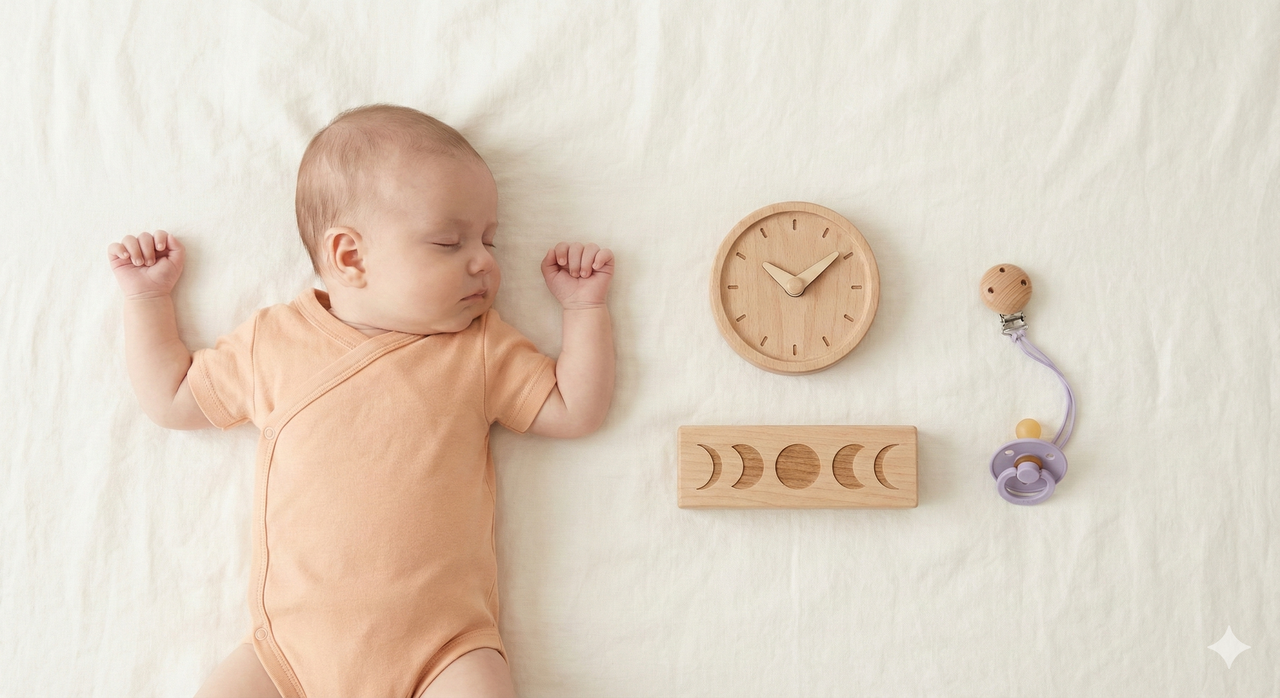
Baby sleep can feel like an unsolvable puzzle. One day your baby sleeps perfectly; the next, they’re up every hour. You read conflicting advice online, get tips from well-meaning relatives, and still wonder: What actually works?
This comprehensive guide brings together everything you need to know about baby sleep—from understanding why babies sleep the way they do, to practical strategies that help them (and you) get more rest.
What you’ll find in this guide:
- The science behind baby sleep
- Age-by-age sleep expectations
- Practical strategies for common sleep challenges
- Links to detailed guides on specific topics
Let’s start from the beginning.
Understanding Baby Sleep: The Basics
Baby sleep is fundamentally different from adult sleep. Understanding these differences is the first step to realistic expectations and effective strategies.
Why Baby Sleep Is Different
Shorter sleep cycles: Adults have 90-minute sleep cycles. Babies? Just 30-50 minutes. This is why babies wake so frequently—they’re transitioning between cycles much more often than we do.
More light sleep: Newborns spend about 50% of their sleep in light, active sleep (REM). Adults only spend 20-25% in REM. This means babies are more easily awakened.
Immature circadian rhythms: Babies aren’t born knowing day from night. This internal clock develops over the first 3-4 months.
Tiny stomachs: Newborns genuinely need to eat every 2-4 hours, including at night. This isn’t a sleep “problem”—it’s biology.
The key insight: Most baby sleep “problems” are actually normal developmental stages. Understanding this can reduce frustration and help you respond appropriately.
Newborn Active Sleep
If you’ve ever watched your newborn twitch, grunt, and grimace in their sleep, you’ve witnessed active sleep in action.
What it looks like:
- Rapid eye movements under closed lids
- Twitching, jerky movements
- Grunting, whimpering sounds
- Irregular breathing
- Facial expressions (smiles, frowns)
What it means: This isn’t discomfort—it’s your baby’s brain building millions of neural connections. Active sleep is essential for development.
What to do: Wait before intervening. Many babies in active sleep will settle back down without help. Picking them up may actually wake them fully.
Wake Windows: The Foundation of Good Sleep
One of the most powerful concepts in baby sleep is the wake window—the amount of time your baby can comfortably stay awake between sleep periods.
Get wake windows right, and settling your baby becomes dramatically easier. Get them wrong, and you’ll fight an uphill battle against biology.
Why Wake Windows Matter
When your baby stays awake too long, their body releases stress hormones (cortisol and adrenaline). Paradoxically, this makes them harder to settle, not easier. This is why an overtired baby fights sleep.
When your baby isn’t awake long enough, they don’t have enough “sleep pressure” to fall asleep easily or stay asleep long.
The sweet spot: Putting your baby down when they’re tired but not overtired—during their optimal wake window.
Wake Windows by Age
| Age | Wake Window | Notes |
|---|---|---|
| 0-4 weeks | 45-60 min | Very short—often just feeding + diaper change |
| 4-8 weeks | 60-90 min | Gradually lengthening |
| 2-3 months | 75-90 min | Starting to become more predictable |
| 3-4 months | 90-120 min | May vary by time of day |
| 4-6 months | 1.75-2.5 hours | First wake window often shortest |
| 6-9 months | 2-3 hours | Moving toward 3 naps, then 2 |
| 9-12 months | 2.5-4 hours | 2 naps, longer wake windows |
For the complete breakdown: Read our detailed guide on understanding baby wake windows.
Sleep Cues: Reading Your Baby’s Signals
Wake windows give you a framework, but your baby gives you real-time feedback through sleep cues—behavioral signals that say “I’m getting tired.”
Early Sleep Cues (The Golden Window)
When you see these, start winding down:
- Staring off into space
- Decreased activity, calmer movements
- Less engaged with toys or faces
- Quieter, less vocal
- Yawning (though can also be a late sign)
- Red eyebrows or around the eyes
Late Sleep Cues (Act Now)
If you see these, you need to get baby to sleep immediately:
- Eye rubbing
- Ear pulling
- Fussiness, irritability
- Turning head away from stimulation
- Arching back
Overtired Signs (Missed the Window)
- Frantic crying that’s hard to calm
- Wired, hyperactive behavior
- Back arching, body stiffening
- Refusing to eat
For the complete guide: Learn to recognize all the baby sleep cues at every age.
Common Sleep Challenges (And Solutions)
The Overtired Trap
The problem: Your baby is exhausted but fights sleep harder than ever. The more tired they get, the harder it becomes to settle them.
Why it happens: When babies miss their sleep window, stress hormones flood their system. These hormones are designed to keep us alert during “emergencies”—but in your nursery at 2 AM, they’re working against you.
The solution:
- Prevent overtiredness by following wake windows
- Watch for early sleep cues
- If already overtired, reduce all stimulation and use your strongest settling techniques
Full guide: Overtired Baby: Signs, Causes, and How to Help Them Sleep
Baby Won’t Sleep Unless Held
The problem: Your baby sleeps peacefully in your arms but wakes the instant you put them in the crib. The “crib transfer” has become your nemesis.
Why it happens: For nine months, your baby lived in constant warmth, movement, and containment. Your arms replicate this; a flat, still crib doesn’t. Their nervous system is wired to seek proximity to caregivers—being “alone” feels unsafe.
The solution:
- Understand this is biologically normal, especially under 4 months
- Master the crib transfer (warm the mattress, wait for deep sleep, lower slowly)
- Gradually work toward putting baby down drowsier over time
- Accept some contact naps as needed—they’re not “bad habits” at young ages
Full guide: Baby Won’t Sleep Unless Held: Why It Happens and How to Help
Short Naps (The 30-Minute Curse)
The problem: Your baby naps for exactly 30-45 minutes, then wakes up. Every. Single. Time.
Why it happens: Baby sleep cycles are 30-45 minutes long. At the end of each cycle, babies briefly come to light sleep—almost awake. Unlike adults, they haven’t learned to seamlessly transition into the next cycle.
The solution:
- Perfect the wake window timing (both undertired and overtired babies take short naps)
- Optimize the sleep environment (dark, white noise, comfortable temperature)
- Try the “wake to sleep” method for some babies
- Focus on the first nap of the day (highest sleep pressure)
- Accept that short naps are developmentally normal before 4-5 months
Full guide: Baby Only Takes Short Naps? Why 30-Minute Naps Happen and How to Help
Age-by-Age Sleep Guide
Newborn (0-3 Months)
What to expect:
- 14-17 hours of total sleep per day
- No predictable schedule (and that’s okay)
- Frequent night wakings for feeding
- Lots of active sleep (twitching, grunting)
- Short wake windows (45-90 minutes)
Focus on:
- Following wake windows rather than the clock
- Creating day/night distinction (bright during day, dark at night)
- Safe sleep practices
- Survival—not sleep training
Key articles:
3-6 Months
What to expect:
- 12-15 hours of total sleep per day
- Sleep cycles beginning to mature
- Some babies start longer night stretches
- Naps may begin to consolidate (or may still be short)
- 4-month sleep “regression” (actually a progression)
Focus on:
- Establishing consistent wake windows
- Starting to put baby down drowsy but awake (when possible)
- Creating a brief, consistent sleep routine
- Being patient through the 4-month transition
Key articles:
6-12 Months
What to expect:
- 12-14 hours of total sleep per day
- 2-3 naps consolidating to 2 naps
- Many babies capable of longer night stretches
- Wake windows lengthening significantly
- Separation anxiety may affect sleep
Focus on:
- Transitioning from 3 naps to 2
- Consistent bedtime and wake time
- Allowing baby to practice self-settling
- Adjusting wake windows as baby grows
Key articles:
Building Good Sleep Habits
The Sleep Environment
Darkness: Light suppresses melatonin. Make the room dark—really dark—for sleep. Blackout curtains are worth the investment.
White noise: Masks household sounds and helps smooth sleep cycle transitions. Keep it running throughout sleep, not just for falling asleep.
Temperature: 68-72°F (20-22°C) is ideal. Babies sleep better slightly cool than too warm.
Safety: Follow safe sleep guidelines—firm mattress, nothing in the crib, baby on their back.
Consistency Matters
Babies thrive on predictability. This doesn’t mean rigid schedules, but consistent patterns:
- Similar wake windows each day
- Same sleep environment
- Consistent pre-sleep routine (even if brief)
- Same response to night wakings
What NOT to Worry About
In the first 4 months especially, let go of these concerns:
- “Bad habits”: Contact naps, feeding to sleep, and holding your baby are not bad habits in young babies. They’re survival strategies.
- “Self-soothing”: This is a developmental skill that emerges over time, not something you train from birth.
- Perfect nap lengths: Total sleep matters more than individual nap duration.
- What other babies do: Every baby is different. Comparison is the thief of sanity.
Quick Reference: The Sleep Troubleshooting Guide
| Problem | Likely Cause | Try This |
|---|---|---|
| Won’t fall asleep | Undertired or overtired | Adjust wake window by 15-30 min |
| Wakes immediately when put down | Sleep associations, or not in deep sleep | Wait longer before transfer, or practice drowsy-but-awake |
| 30-minute naps | Sleep cycle transition issue | Perfect wake windows, darken room, use white noise |
| Wakes frequently at night | Hunger, habit, or sleep associations | Age-dependent—may be normal |
| Fights naps | Overtired or undertired | Try earlier nap, watch for sleep cues |
| Only sleeps when held | Normal for young babies | Gradual transition, accept some contact naps |
The Bottom Line
Baby sleep is challenging, but it’s also temporary. Here’s what matters most:
-
Understand the biology. Baby sleep is different from adult sleep. Many “problems” are developmentally normal.
-
Master wake windows. This single concept will help more than almost anything else.
-
Watch your baby. Sleep cues tell you when your baby needs sleep—learn to read them.
-
Be flexible. What works at 2 months won’t work at 6 months. Adjust as your baby grows.
-
Prioritize safety. Always follow safe sleep guidelines, no matter how tired you are.
-
Protect yourself. Your well-being matters too. Accept help, let some things go, and know that this phase will pass.
More Resources
Detailed Guides
- Newborn Active Sleep: What It Is and Why It Happens
- Understanding Baby Wake Windows
- Baby Sleep Cues: How to Recognize When Baby Is Ready for Sleep
- Overtired Baby: Signs, Causes, and How to Help
- Baby Won’t Sleep Unless Held: Why and How to Help
- Baby Only Takes Short Naps: Why and What to Do
Track Your Baby’s Sleep
A baby sleep tracker can help you spot patterns, identify optimal wake windows, and see what’s working. The NapLull app makes it easy to log sleep and understand your baby’s unique rhythms.
Have questions? We’re here to help. Remember: you know your baby best. Trust yourself.
Track your baby's sleep patterns
NapLull helps you understand wake windows and create better nap schedules.
Track your baby's sleep patterns
Written by
Wendy
Mom of 3 & Founder
After countless sleepless nights with three kids, I built NapLull to help parents like you find patterns in the chaos. Every article comes from real experience—the good, the hard, and everything in between.
Learn more about us