Baby Sleep Cues: Complete Guide for Parents
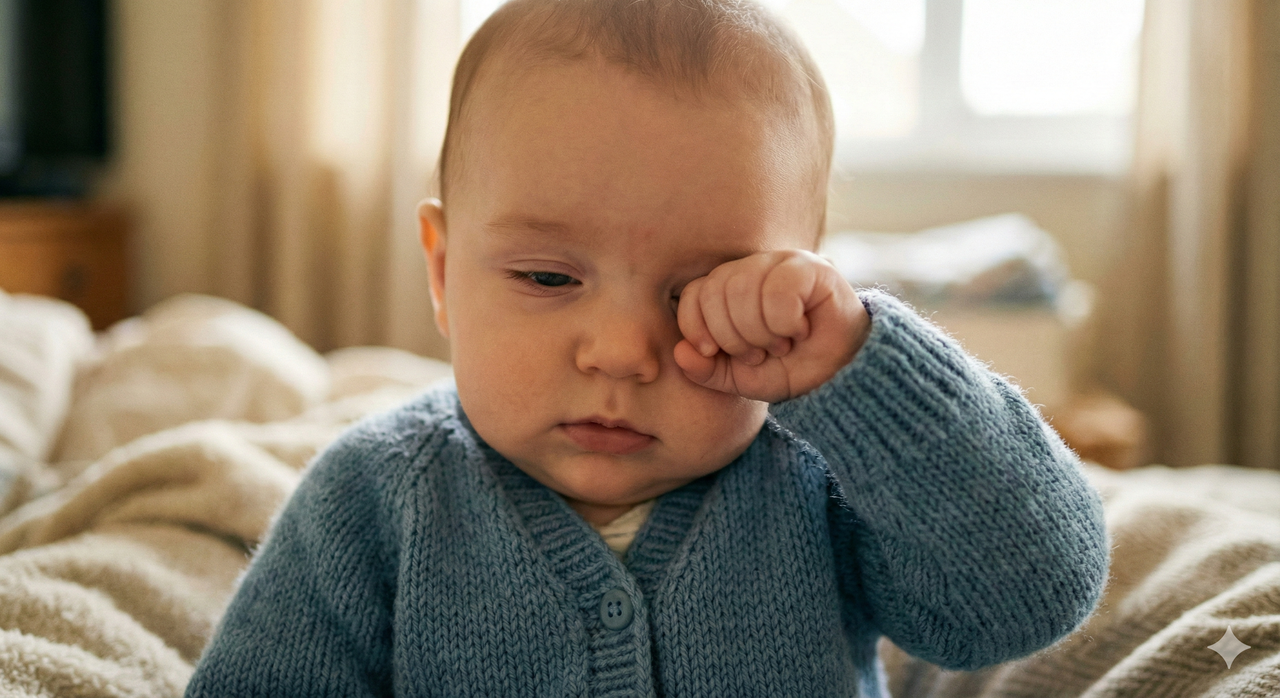
Your baby was happy and playful five minutes ago. Now they’re screaming, arching their back, and refusing to settle. You try rocking, feeding, bouncing—nothing works.
What happened?
You missed the window. Those subtle signals your baby was sending—the ones that said “I’m getting sleepy”—went unnoticed. And now you’re dealing with an overtired baby who fights sleep instead of embracing it.
The good news: baby sleep cues are learnable. Once you know what to look for, you can catch that perfect drowsy window and help your baby fall asleep easily—before the crying starts.
In this guide, you’ll learn:
- The early, subtle sleep cues most parents miss
- How sleepy cues change from newborn to 6+ months
- The difference between hunger cues and sleep cues
- What to do the moment you spot tired signs
Let’s decode your baby’s secret sleep language.
What Are Baby Sleep Cues?
Sleep cues (also called sleepy cues or tired signs) are the behavioral signals your baby gives when their body is ready for sleep. They’re your baby’s way of communicating “I need to rest now” before they can use words.
Why Sleep Cues Matter
Here’s the critical thing: there’s a window of opportunity between when your baby first shows sleep cues and when they become overtired.
| Stage | What’s Happening | What to Do |
|---|---|---|
| Early cues | Melatonin is building | Start your sleep routine |
| Late cues | Sleep window is closing | Get baby to sleep NOW |
| Overtired | Cortisol floods in | Damage control mode |
Miss the early cues, and you’re playing catch-up. Catch them early, and settling your baby becomes dramatically easier.
The golden rule: It’s always easier to put a sleepy baby to sleep than an overtired one. When in doubt, try sleep earlier rather than later.
Newborn Sleep Cues (0-3 Months)
Newborn tired signs can be subtle—and the window between “getting sleepy” and “completely overtired” is very short (sometimes just minutes).
Early Sleepy Cues in Newborns
These are the first signals. When you see them, start winding down:
Physical signs:
- Staring off into space or at a fixed point
- Slowing down movements become less jerky
- Less engagement losing interest in toys or faces
- Quieting less vocal, fewer sounds
- Sucking slows during feeding
Facial cues:
- Glazed eyes or unfocused gaze
- Eyebrows turning red (this is a real thing!)
- Yawning (though this can also be a late sign)
Late Sleep Cues (Act Now!)
If you see these, you need to get your newborn to sleep immediately:
- Eye rubbing with fists
- Ear pulling or face scratching
- Fussiness and irritability
- Jerky movements arms and legs flailing
- Turning head away from stimulation
- Rooting (can be confused with hunger)
Overtired Signs (You’ve Missed the Window)
If your newborn shows these, they’ve crossed into overtired territory:
- Arching back
- Frantic crying that’s hard to calm
- Wired, hyperactive behavior (paradoxically)
- Refusing to feed
- Inconsolable even when held
At this point, you’ll need to work harder to settle them. See our guide on how to get an overtired baby to sleep.
Infant Sleep Cues (3-6 Months)
By 3-6 months, your baby’s sleep cues become slightly more predictable, and the window before overtiredness lengthens a bit.
What Changes at This Age
- More obvious cues - Signals are clearer and easier to read
- Longer wake windows - You have more time between cues and meltdown
- Individual patterns emerge - Your baby develops their own “tells”
Common Sleep Cues at 3-6 Months
Early cues:
- Decreased activity level
- Quieter vocalizations
- Looking away from you or toys
- Less smiling
- Slower movements
Late cues:
- Yawning (multiple yawns = move now)
- Eye rubbing
- Clinging to you
- Fussiness during play
- Sudden mood shift
Pro Tip: The “Three Yawn Rule”
Many parents find the three yawn rule helpful: by the third yawn, your baby should already be in their sleep space with the routine started. Don’t wait for more signs.
Sleepy Cues for 6 Month Old and Beyond
By 6 months, babies often give more distinct signals—but they can also learn to fight sleep when they’re having fun.
6-12 Month Sleep Cues
At this age, watch for:
Behavioral cues:
- Clumsiness - Falling over, dropping things more
- Losing interest in activities they usually love
- Seeking comfort objects - Reaching for lovey, blanket, or you
- Thumb/finger sucking increases
- Clingy behavior - Wanting to be held more
Physical cues:
- Eye rubbing (now often more deliberate)
- Ear pulling
- Hair pulling or twirling
- Rubbing face on your shoulder
Verbal cues:
- Whining or fussing sounds
- Specific “tired cry” (you’ll learn yours)
- Decreased babbling
The Distraction Problem
Important note: Older babies can sometimes override their sleep cues when something interesting is happening. They might seem fine during play but crash hard the moment stimulation stops.
This is why tracking wake windows becomes valuable as a backup—you know roughly when sleep should happen, even if cues are masked.
Sleep Cues vs. Hunger Cues: How to Tell the Difference
This is one of the most common sources of confusion for new parents. Hunger and tiredness can look similar, especially in newborns.
Overlap Signals
These cues can mean either hunger OR tiredness:
- Rooting (turning head, opening mouth)
- Fussiness
- Sucking on hands
- Crying
How to Tell the Difference
Consider the timing:
- When did your baby last eat?
- When did they last sleep?
- Where are they in their wake window?
Hunger is more likely if:
- It’s been 2-3+ hours since last feed
- They eagerly latch and feed actively
- They calm immediately when offered milk
- They show sustained sucking
Tiredness is more likely if:
- They’ve been awake for their typical wake window
- They show multiple tired signs (not just one)
- They turn away from the breast/bottle
- They feed briefly then fuss again
- Other sleepy cues are present (yawning, eye rub)
The Quick Test
If you’re unsure, try offering a feed first. If your baby:
- Feeds well → They were hungry
- Fusses at the breast/bottle or feeds briefly → Probably tired
- Feeds then immediately fusses again → Could be overtired
Your Baby’s Unique Sleep Cues
While there are universal tired signs, every baby also develops their own personal tells. Pay attention to patterns specific to your child.
Common “Secret Signals” Parents Discover
- A specific facial expression
- A particular sound or cry
- Touching their ear, nose, or a specific spot
- A certain way of moving
- Changes in eye contact
How to Learn Your Baby’s Cues
- Keep a log for a week - Note what you see before successful naps
- Watch when they’re calm - Learn their baseline behavior
- Note what precedes meltdowns - What did you miss?
- Trust your gut - You know your baby best
A baby sleep tracker app can help you spot patterns between your baby’s cues and their ideal sleep timing.
What to Do When You Spot Sleep Cues
Seeing the cue is only half the battle. Here’s what to do next:
When You See Early Cues
Start winding down immediately:
- Reduce stimulation (dim lights, lower voices)
- Move to the sleep environment
- Begin your consistent sleep routine
- Keep it brief (5-10 minutes max for naps)
When You See Late Cues
Act fast:
- Skip the full routine if needed
- Go directly to soothing (rocking, feeding, whatever works)
- Get them into their sleep space
- Don’t worry about “perfect” - just get them down
When They’re Already Overtired
Damage control:
- Reduce all stimulation
- Use your strongest settling techniques
- It’s okay if this nap is a contact nap
- Focus on preventing it next time
Matching Sleep Cues to Wake Windows
Sleep cues and wake windows work together. Here’s a quick reference:
| Age | Typical Wake Window | When to Watch for Cues |
|---|---|---|
| 0-4 weeks | 45-60 min | Start watching at 30 min |
| 4-8 weeks | 60-90 min | Start watching at 45 min |
| 2-3 months | 75-90 min | Start watching at 60 min |
| 3-4 months | 90-120 min | Start watching at 75 min |
| 4-6 months | 2-2.5 hours | Start watching at 1.5 hours |
| 6-9 months | 2.5-3 hours | Start watching at 2 hours |
| 9-12 months | 3-4 hours | Start watching at 2.5 hours |
Key insight: Start watching for cues BEFORE the wake window ends. You want to catch the early signs, not wait until your baby is already fussy.
Common Mistakes Parents Make
Mistake 1: Waiting for “Obvious” Signs
The most obvious sleep cues (crying, eye rubbing, fussiness) are often late signs. By the time you see them, the optimal window may have passed.
Fix: Learn the subtle early cues—especially the “staring off” and “slowing down” signals.
Mistake 2: Assuming Fussiness = Hunger
Not every fuss means your baby is hungry. Constantly offering feeds when your baby is actually tired can create overtiredness.
Fix: Check the timing. If they’ve been awake for a full wake window, try sleep first.
Mistake 3: Ignoring Cues During “Activities”
It’s tempting to finish the playdate, shopping trip, or tummy time session. But your baby’s sleep needs don’t pause for convenience.
Fix: Be willing to leave early or cut things short when you see sleep cues.
Mistake 4: Applying One-Size-Fits-All Timing
Books and charts give averages, but your baby is an individual. Some babies have shorter wake windows; some have longer ones.
Fix: Let your baby’s cues override general guidelines.
FAQs About Baby Sleep Cues
How do I know if my baby is tired or just bored? Bored babies typically perk up with a change of scenery or activity. Tired babies stay fussy or become more irritable with stimulation. Try briefly changing the activity—if they engage, they weren’t tired. If they stay disinterested, it’s probably time for sleep.
My baby never seems to show sleep cues. What’s wrong? Some babies have very subtle cues, and some override their tiredness well. If your baby seems to go from fine to overtired instantly, rely more on wake window timing. Start your sleep routine based on the clock, not just cues.
Can sleep cues change over time? Absolutely. The cues you learned at 2 months may not apply at 6 months. Stay observant as your baby grows—their signals will evolve.
What if different caregivers miss the cues? Create a simple “sleep cue cheat sheet” for anyone caring for your baby. List your baby’s specific signs with descriptions like “When she stares at the wall and her movements slow down, it’s time to start the nap routine.”
Is yawning always a sleep cue? Not always. Single yawns can happen randomly. But multiple yawns, or yawning combined with other cues, reliably indicates tiredness. Also, some babies yawn when transitioning between sleep cycles—it doesn’t always mean they need more sleep.
My newborn has no consistent cues. Is this normal? Yes, especially in the first 6-8 weeks. Newborn behavior can be erratic. Rely more on short wake windows (45-60 minutes) and watch for any subtle changes in engagement or activity level.
Key Takeaways
- Sleep cues are your baby’s way of saying “I need rest now”
- Early cues (staring, slowing down, quieting) are subtle—learn them to avoid overtiredness
- Late cues (yawning, eye rubbing, fussiness) mean act immediately
- Newborn cues are subtle and windows are short; by 6 months, cues are clearer
- Hunger vs. tiredness: Check timing and try a quick feed test if unsure
- Every baby is unique—learn your baby’s personal sleep signals
- Use wake windows as a backup when cues are unclear
- Act on early cues—it’s always easier to put a sleepy baby to sleep than an overtired one
Your baby is communicating with you all the time. Once you crack the code of their sleep cues, naps and bedtime become dramatically easier—for both of you.
Track your baby's sleep patterns
NapLull helps you understand wake windows and create better nap schedules.
Track your baby's sleep patterns
Written by
Wendy
Mom of 3 & Founder
After countless sleepless nights with three kids, I built NapLull to help parents like you find patterns in the chaos. Every article comes from real experience—the good, the hard, and everything in between.
Learn more about us